Why Your Walking Route Feels Longer in the Same Time
Quick Answer: Your familiar route feels longer in late summer because the light changed. Lower sun angle, longer shadows, and earlier dusk all reduce the visual landmarks your brain uses to estimate distance and passage of time — and a route with fewer distinct visual events reliably feels longer, even at identical pace and duration.
Your watch says the same distance. Your pace is within a few seconds of what it was in July.
The walk feels longer. Not harder — longer, as though the middle section has been stretched.
This is a well-documented perceptual effect and it has a genuinely interesting explanation.
Why does the same distance feel longer?
Human distance estimation is not built on time or steps. It is built substantially on the number of distinct things you notice along the way.
This is sometimes called the segmentation effect: a route broken up by many visual events — a shop, a bend, a distinctive tree, a change in surface — is judged as taking longer in prospect but passing faster in experience. A route that is visually uniform feels longer while you are in it.
What changes in late August is how much of your route your brain actually registers.
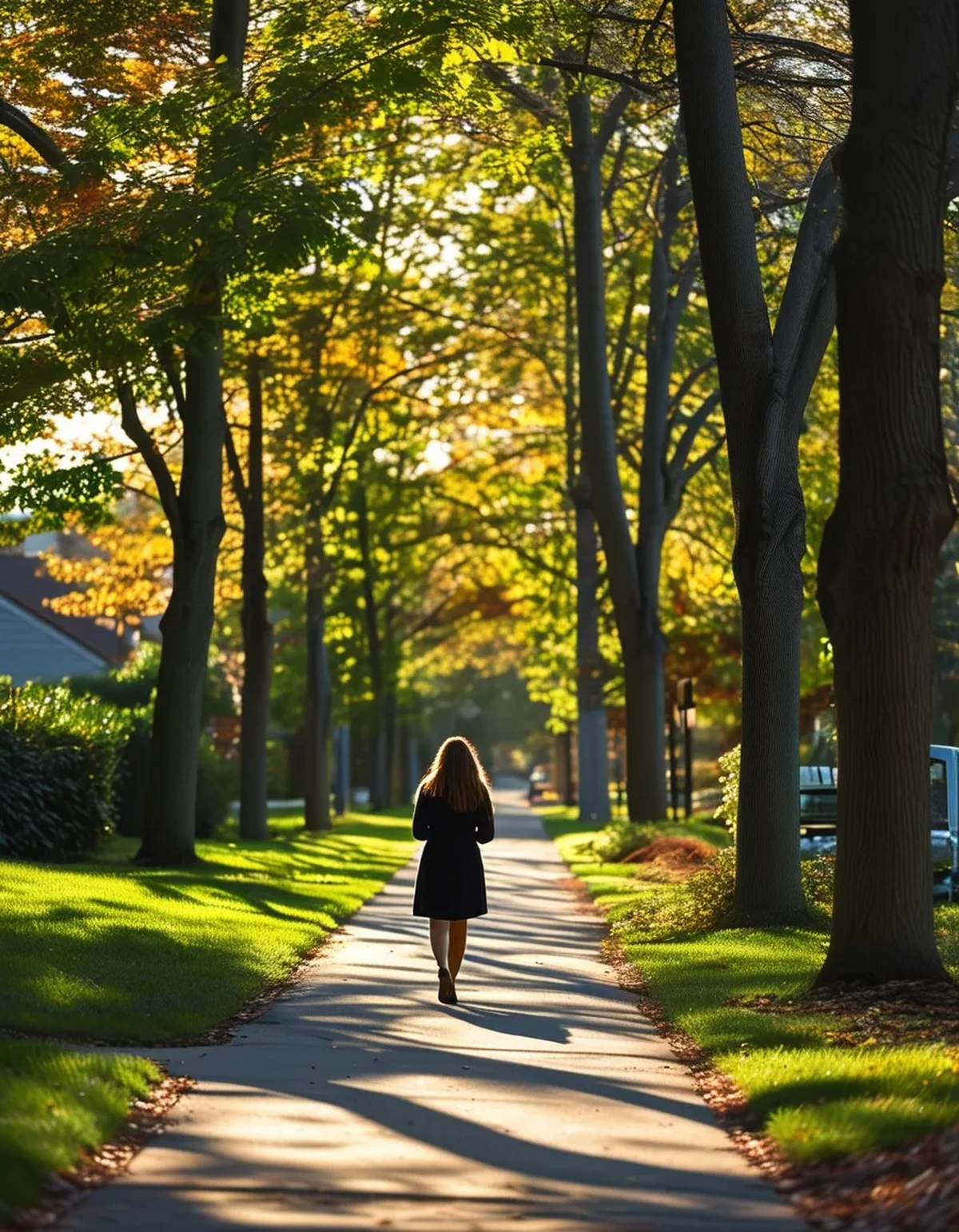
The sun angle drops. Lower sun means longer shadows and much more contrast between lit and shaded areas. Sections of your route that were evenly lit in July are now half in deep shadow, and the shaded parts effectively stop supplying visual detail. Fewer registered landmarks, longer-feeling walk.
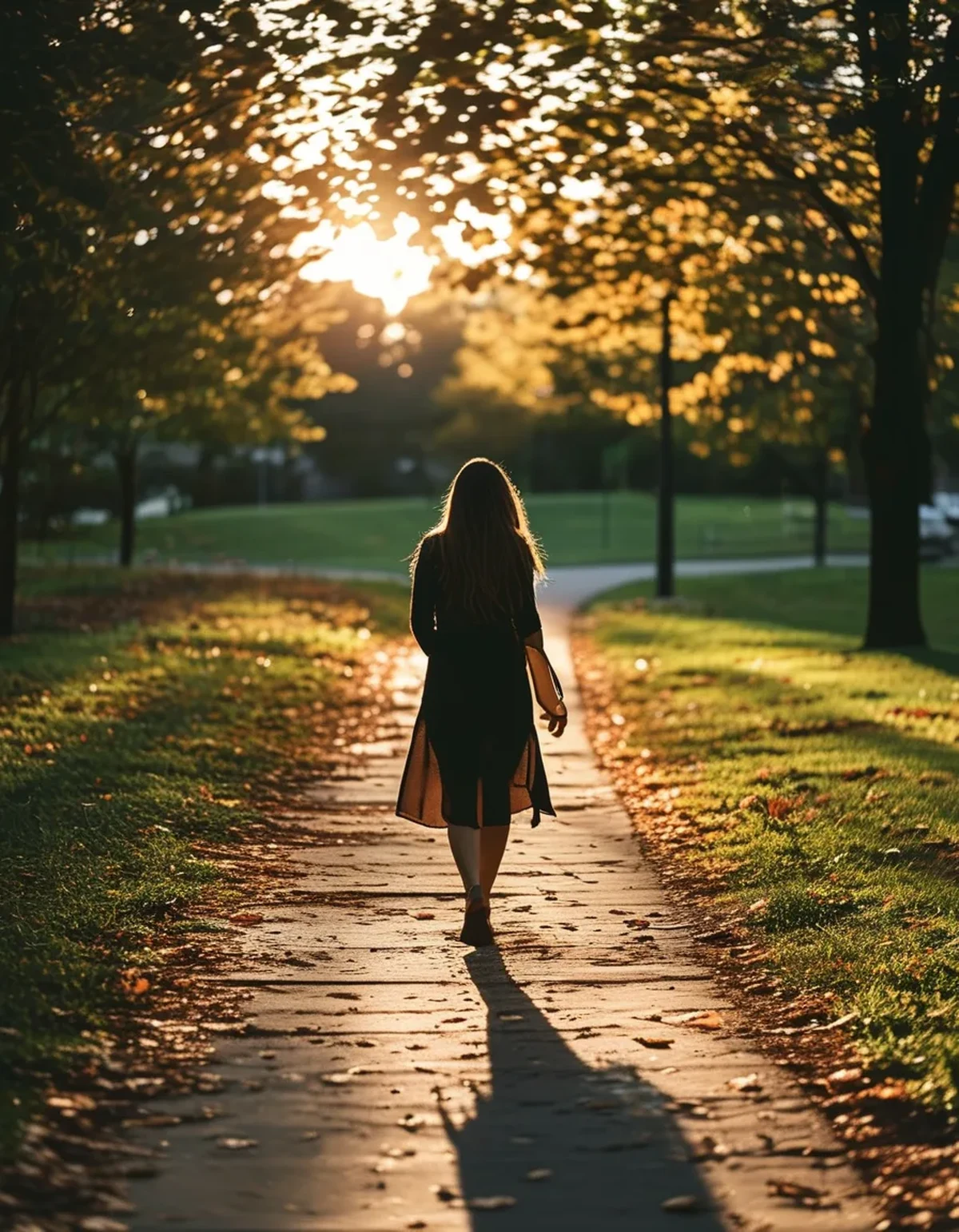
Light levels fall at the hour you walk. If you walk in the evening, you are now walking in noticeably dimmer conditions than you were a month ago at the same clock time. Reduced light reduces both the detail you can resolve and the peripheral information your brain uses for optic flow — the sense of motion you get from the world sliding past.
Optic flow is what tells you how fast you are moving. Reduce the visual texture around you and your sense of speed drops, which directly translates to a feeling of covering ground more slowly.
None of this is fatigue and none of it is fitness. It is a measurement error in a system that was never measuring distance directly.
Is any of it actually physical?
Some of it, and it is worth separating the real effects from the perceptual ones.
You are probably walking slightly slower. Dimmer conditions produce a small, largely unconscious reduction in walking speed, because visual information about the surface ahead is what governs how confidently you place your feet. On uneven ground the effect is larger. A 3 to 5 per cent pace reduction is easy to miss and enough to make a forty-minute loop take forty-two.
Your stride shortens on uncertain surfaces. Wet leaves, damp pavement, and shaded sections all produce slightly shorter, flatter steps. Shorter strides mean more steps for the same distance, and step count is one of the cues people use to estimate effort.
You are cooler, which changes perceived exertion in both directions. Cooler air genuinely reduces cardiovascular strain — the same pace costs less. But it also means less of the obvious effort signals you were using in July to feel like the walk was doing something.
End-of-summer accumulated fatigue is real for some people, particularly if summer meant more activity, less sleep, and more travel. A walk that feels heavy in the legs rather than long in duration is a different signal and worth noticing.
The useful check: look at your actual pace data across the last six weeks. If your pace is stable, this is entirely perceptual and there is nothing to fix. If it has drifted down several per cent, that is the dimmer-conditions effect and it is normal.
What actually makes the walk feel shorter again?
You cannot change the light. You can change how many things you notice.
Reverse the route. This is the single most effective and least effortful fix. A familiar loop walked backwards presents an almost entirely new sequence of visual information, and the effect on perceived duration is immediate and large.
Break the route into named segments. Not arbitrary — real segments with a start and end you actually notice: to the post box, post box to the bridge, bridge to the top of the hill. Segmented routes are experienced as several short walks rather than one long one.
Add one deliberate variation a week. A different street for two blocks. A detour around a park. It does not need to change the distance.
Change the time of day rather than the route. A morning version of the same loop is a genuinely different walk in terms of light, traffic, and the people on it.
Vary the pace deliberately. Two or three minutes noticeably faster, then back to normal, repeated a few times. Interval structure breaks a uniform block of time into segments, which does the same work as visual landmarks.
Reconsider what you listen to. A podcast makes time pass faster but reduces how much of the route you register, which is fine. Music with a tempo close to your step rate does something different — it stabilises pace and reduces perceived effort. Neither is wrong; they solve different halves of the problem.
What Nobody Tells You About Autumn Walking
A few things that only become obvious once you have walked through a few of these transitions.
The first cool week is when most people’s step count drops for the year. Not gradually across autumn — in one distinct step, in the first week that feels different. If you protect that specific week, the whole season usually holds.
Your shoes are wrong before you notice. Summer walking shoes are ventilated and often quite worn by late August, and the first genuinely wet week is what reveals it. Grip on wet leaves is a real thing and worn tread is the first thing to fail.
Visibility becomes your problem, not the drivers’. Once you are finishing in dusk on any route with road crossings, a reflective element on a moving part — ankles, wrists — changes how far away you become visible by a large margin.
Evening walks push your body clock later; morning walks pull it earlier. If your sleep is drifting late as the season changes, moving one walk a week to the morning is a more effective intervention than most sleep advice, because morning light exposure is the strongest available signal to your circadian system.
The route you can walk in the rain is the route that survives the winter. If your loop requires good weather — an unlit park, a muddy path, a long exposed stretch — it will quietly stop happening in November. It is worth finding the wet-weather version now, while you still have the daylight to explore it.
FAQ: Seasonal Walking Questions, Answered
Should I be walking further as the weather cools?
Not necessarily. Cooler conditions do make the same pace less physiologically demanding, so there is room to go slightly further or slightly faster if you want to. But consistency across the whole season is worth more than a longer walk in September that you abandon in November.
Why do I feel more tired after walks now even though it is easier weather?
Usually not the walk. Reduced daylight exposure affects alertness and mood independently of exercise, and the shift often shows up around this time of year. Walking in the brightest part of the day available to you, rather than after dark, tends to help more than shortening the walk does.
Is it worth tracking anything, or does that make it worse?
Tracking pace is useful for exactly the question in this article — it tells you whether the change is real or perceptual, which is a genuinely different situation. Tracking daily step totals is more mixed, since it tends to turn a pleasant habit into a target. Check pace occasionally, ignore the rest.
TL;DR:
- Distance perception depends on how many distinct things you notice, and lower sun plus deeper shadow means you notice fewer
- Dimmer conditions genuinely slow most people by a few per cent without them realising
- Reversing the route is the fastest fix, because it presents a whole new sequence of landmarks
- Break the loop into named segments, or add pace intervals — both restore the sense of structure
- Protect the first cool week specifically; that is where the year’s step count usually drops
The walk did not get longer. Your route stopped giving you as much to notice, and noticing things is how you were measuring it all along.
See It in Motion
Seen here: Super High Waist Embossed Yoga Leggings with Inner Pocket — shop it on bubblelime.com
Keep Reading
This article is for general informational and styling purposes only. Fit, sizing, and product availability may vary.