Two Short Walks vs One Long Walk: What Actually Differs
Quick Answer: Two 15-minute walks and one 30-minute walk are not interchangeable. Splitting into two sessions is better for blood sugar management and for breaking up sitting time, and it is generally easier to sustain. One continuous walk is better for cardiovascular endurance and for the mental reset that shorter walks rarely deliver. If your goal is metabolic health or step consistency, split them - ideally after meals. If your goal is fitness progression or headspace, keep at least one longer walk in the week.
The total is identical. Thirty minutes is thirty minutes and the step counter does not care how you got there.
Except the step counter is measuring the wrong thing for most of what people actually want from walking.

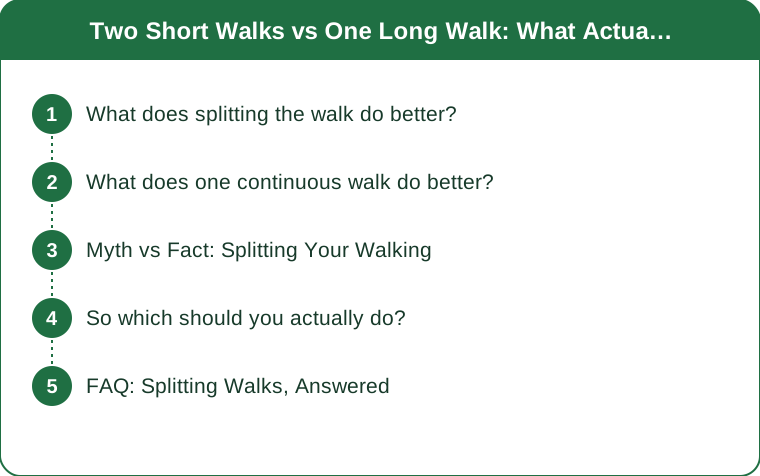
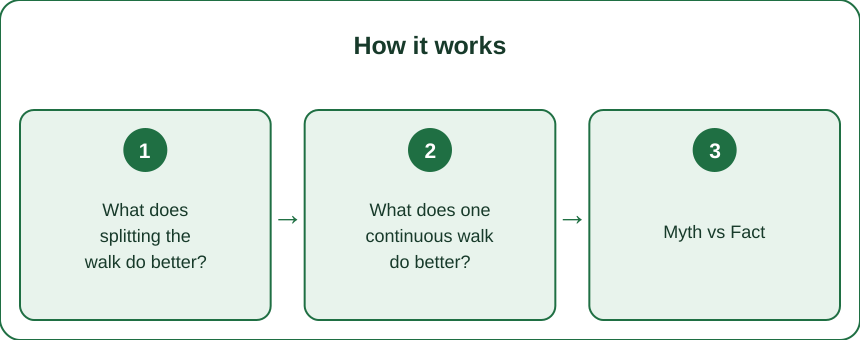
What does splitting the walk do better?
It manages post-meal blood sugar more effectively. Walking shortly after eating helps blunt the rise in blood glucose, and research on short post-meal walks has found meaningful effects from bouts as brief as ten to fifteen minutes. Two walks placed after two meals catch two glucose peaks; one long walk at another time catches neither.
It breaks up sedentary time. Prolonged uninterrupted sitting is associated with health risks somewhat independently of total exercise. Two walks create two interruptions in the day, which is the mechanism that matters here.
It is easier to fit and therefore easier to sustain. Fifteen minutes twice fits into a working day in places thirty minutes does not, and the adherence advantage tends to outweigh small physiological differences over a year.
It reduces the all-or-nothing failure mode. If the long walk gets cancelled, you did nothing. If one of two short walks gets cancelled, you still did half.
It suits joints that object to longer durations. For anyone managing knee, hip, or foot discomfort, two shorter bouts are frequently tolerated better than one continuous one - though persistent pain is worth discussing with a clinician rather than working around.
And it stacks naturally onto existing routines. After breakfast and after dinner are two anchors that already exist in your day, which is why post-meal walks tend to stick better than a scheduled block.
What does one continuous walk do better?
It builds cardiovascular endurance more effectively. Sustained continuous effort is a different stimulus from repeated short bouts. If your goal is being able to walk further or faster, longer continuous sessions are what develop that capacity.
It reaches a steadier state. It takes several minutes for heart rate and breathing to settle into a rhythm. A fifteen-minute walk spends a meaningful proportion of its duration still adjusting; a forty-minute walk spends most of it at a steady effort.
It delivers the mental reset that short walks rarely do. The commonly reported experience of thoughts settling and problems resolving tends to arrive after the first ten to twenty minutes. Two walks that each end at that point can leave you feeling like you never quite got there.
It develops tolerance for longer efforts. If you want to hike, walk a half marathon, or spend a day sightseeing without suffering, you need to have spent time on your feet continuously. Two short walks do not prepare feet, calves, or the lower back for a three-hour day.
It has a lower per-session overhead. Shoes on, weather checked, dog leashed, keys found - that cost is paid twice with two walks. For some schedules that overhead is the deciding factor.
And it is easier to make progressive. Adding five minutes to one walk is simple to track. Progressing two walks simultaneously is more bookkeeping than most people sustain.

Myth vs Fact: Splitting Your Walking
Myth: Only walks over thirty minutes count. Fact: the old idea that exercise needed ten-minute minimum bouts has been dropped from major physical activity guidance. Shorter bouts count toward weekly totals.
Myth: Total steps is all that matters. Fact: total volume matters a great deal, but timing matters too. The same steps taken after meals do something for blood glucose that the same steps taken at another time do not.
Myth: Two short walks are always the better option. Fact: they are better for metabolic and adherence purposes. For endurance, mental reset, and preparing for long days on your feet, continuous duration is what does the work.
Myth: You need to walk fast for it to help. Fact: post-meal glucose benefits appear at comfortable walking paces. Pace matters more for cardiovascular fitness than for the metabolic effect.
Myth: Splitting means you never build fitness. Fact: you can progress split walks by adding pace or incline. It is simply more bookkeeping than progressing one session.
Myth: You must choose one approach. Fact: the most practical pattern for most people is short post-meal walks on weekdays and one longer continuous walk on a weekend day.
So which should you actually do?
If your priority is blood sugar or breaking up sitting: two or three short walks, placed after meals. Ten to fifteen minutes each, at a comfortable pace, starting within about half an hour of eating.
If your priority is endurance or headspace: one longer continuous walk. Thirty to sixty minutes, ideally somewhere you do not have to navigate constantly, so your attention can drift.
If your priority is simply consistency: split them. The adherence advantage is real and it compounds. A pattern you keep for a year beats a better pattern you keep for three weeks.
The practical compromise most people land on: both. Short post-meal walks on weekdays plus one long walk at the weekend covers metabolic, cardiovascular, and mental goals without requiring an hour on a Tuesday.
Progress the long one, keep the short ones easy. Add five minutes or a hill to the weekend walk every few weeks. Leave the post-meal walks exactly as they are - their value is in happening, not in intensity.
And put them in your calendar as anchors, not as goals. After breakfast and after dinner are existing events. Attaching a walk to something that already happens is far more reliable than scheduling one that has to compete with everything else.
FAQ: Splitting Walks, Answered
Is it better to walk twice a day or once for longer?
It depends on the goal. Two shorter walks are better for blood sugar management, breaking up sitting, and adherence. One longer walk is better for cardiovascular endurance and mental reset.
Do short walks still count toward exercise guidelines?
Yes. Current physical activity guidance counts all activity toward weekly totals and has removed the old minimum-bout requirement.
When should I take a post-meal walk?
Generally within about half an hour of finishing the meal, for ten to fifteen minutes at a comfortable pace. That timing lines up with when blood glucose is typically rising.
Can I build fitness with only short walks?
Up to a point - you can progress by adding pace or gentle inclines. But for the ability to walk further or spend a long day on your feet, you need at least some continuous longer sessions.
TL;DR:
- Two short walks and one long walk deliver the same steps and genuinely different benefits.
- Split walks win for blood sugar management, breaking up sitting time, and staying consistent - especially placed after meals.
- One continuous walk wins for cardiovascular endurance, tolerance for long days on your feet, and the mental reset that arrives after the first ten to twenty minutes.
- Short bouts absolutely count - the old ten-minute minimum was removed from major activity guidance.
- The practical answer for most people is both: post-meal walks on weekdays, one longer walk at the weekend, progressing only the long one.
Same minutes, different jobs. Pick the one that matches what you actually want from the walk.
This is general information, not medical advice.
See It in Motion
Seen here: Super High Waist Embossed Yoga Leggings with Inner Pocket — shop it on bubblelime.com
Keep Reading
This article is for general informational and styling purposes only. Fit, sizing, and product availability may vary.