When Your Shoes Are the Reason the Walk Hurts
Quick Answer: Three shoe problems cause most walking pain. Shoes that are too small - and roughly a third to a half of people wear shoes shorter or narrower than their feet, which causes toe pain, nail problems, and forefoot burning. Shoes past their useful life, where midsole foam has compressed and stopped absorbing load, typically after 500 to 800 kilometres. And running shoes used for walking, which is usually fine but occasionally is not, because a very high stack and a soft heel change how the foot rolls. Before you change your route or your mileage, measure your feet at the end of the day, check the age of the shoes, and press a thumb into the midsole.
You were fine for three weeks and now something aches. Almost nobody looks at the shoes.
What are the three most common shoe problems?
1. The shoes are too small - by far the most common.
Studies measuring feet against the shoes people actually wear have repeatedly found a large proportion in the wrong size, usually too short, too narrow, or both. Several factors drive it:
- Feet lengthen and widen over adulthood, particularly after pregnancy and with age, as connective tissue changes. The size you have bought for twenty years may not be your size.
- Feet swell during the day and during exercise - by a meaningful amount. A shoe fitted at 10am can be too small at 5pm.
- Sizing is inconsistent between brands, and between models within a brand.
The consequences show up as black or bruised toenails, burning across the ball of the foot, numbness in the toes, and pain between the third and fourth toes.
2. The shoes are worn out.
Midsole foam compresses with repeated loading and gradually stops rebounding. The critical point: this happens long before the shoe looks worn. Uppers stay pristine while the foam that does the work has flattened.
Typical useful life is around 500 to 800 kilometres, or roughly 6 to 12 months of regular walking. Heavier walkers, harder surfaces, and hotter storage all shorten it.
The tests:
- Press a thumb firmly into the midsole. New foam resists and springs back; dead foam feels dense and stays compressed.
- Put the shoes on a flat surface at eye level and look from behind. If they lean inward or outward, the midsole has collapsed unevenly.
- Look at the outsole tread - worn smooth in patches means it has done its work.
- The clearest signal of all: new aches that appeared without any change in distance.
3. The wrong type of shoe for walking.
Running shoes work perfectly well for most walkers, and this is not a rule against them. But some very cushioned, high-stack running shoes are built around a running footstrike, and in walking - where the heel lands first and the foot rolls through more slowly - a very soft, very tall heel can feel unstable and change loading at the ankle and knee. If a new pair of maximal running shoes coincided with new aches, that is worth investigating.
How do you buy shoes that actually fit?
The process matters more than the brand, and most of it is free.
Measure, do not assume.
- Measure both feet - most people have a size difference, and you fit the larger one.
- Measure in the afternoon or evening, when feet are at their largest.
- Measure length and width. Width is the more commonly ignored dimension and a frequent cause of forefoot pain. Many brands offer wide fittings and most people never try them.
- Do it standing, with weight through the foot, since feet spread under load.
Fit rules:
- A thumb’s width - roughly 1 to 1.5cm - between the longest toe and the end of the shoe. Note the longest toe is not always the big toe.
- The widest part of your foot should sit at the widest part of the shoe. If it sits behind or ahead of it, the shape is wrong regardless of size.
- The heel should not slip when you walk. Some movement is normal; lifting out is not.
- No pressure points at all on first wearing. Walking shoes should not need breaking in - that idea belongs to stiff leather footwear, not modern athletic shoes.
- Wear the socks you will actually walk in when trying them on.
Practical points:
- Walk on a hard surface in the shop, not just on carpet.
- Buy in the afternoon.
- Ignore the number on the box. Sizing varies enough between brands that fit is the only measure that matters.
- Rotate two pairs if you walk daily. Foam recovers over 24 hours, so alternating extends the life of both and gives you a direct comparison when one is dying.
On socks, which are underrated: cotton socks hold moisture and are the main contributor to blisters. Synthetic or merino wool socks wick and reduce friction substantially, and a good pair costs a fraction of the shoes. Seamless toes help for anyone prone to rubbing.
On insoles: over-the-counter insoles help some people, particularly for arch support or extra cushioning, and cost little to try. Custom orthotics are a different matter and are worth pursuing through a professional if there is a specific diagnosed issue rather than as a first response to general discomfort.

What Nobody Tells You About Walking Shoes
The shoe is rarely the whole story. New walking pain very often traces to a rapid increase in volume rather than to equipment. Going from 3,000 to 12,000 steps a day in one week is a large jump in tissue loading, and shin, foot, and knee pain from that is a load problem, not a shoe problem. Increasing by roughly 10 percent a week avoids most of it.
Surface matters more than people expect. Concrete pavement is considerably harder than asphalt, which is harder than a compacted path. Consistently walking on one camber is another hidden factor - a road that slopes for drainage effectively makes one leg shorter for the whole walk, and that asymmetry can produce one-sided hip or knee pain that has nothing to do with your shoes.
Heel drop is worth knowing about. The height difference between heel and forefoot varies from 0 to 12mm across models. Switching abruptly to a much lower drop shifts load onto the calf and Achilles, which is a common cause of new calf tightness after buying minimalist-style shoes. Transition gradually if you change.
Old shoes kept for gardening are how people get hurt. The pair demoted to dog-walking is the pair with dead foam, and dog walks are often the longest walk of the day.
Storage degrades shoes. Foam ages even unworn, and heat accelerates it. Shoes stored in a hot car boot or a sunny porch deteriorate faster than the mileage suggests.
Lacing is a free adjustment most people never use. Heel lock lacing - using the extra top eyelet to create a loop - stops heel slip. Skipping an eyelet over a painful spot relieves pressure on the top of the foot. Both take thirty seconds and solve problems people usually solve by buying new shoes.
Pain that persists is not a shoe question. Pain lasting more than a couple of weeks despite sensible adjustments, pain that wakes you at night, sharp localised pain in a bone, or numbness that does not resolve on removing the shoe all warrant assessment rather than another purchase.
This is general information, not medical advice. Persistent foot, shin, or knee pain should be assessed by a professional - particularly sharp bone pain, which needs ruling out properly.
FAQ: Walking Shoes and Pain, Answered
How often should I replace walking shoes?
Roughly every 500 to 800 kilometres, or 6 to 12 months of regular walking. The more reliable signal is new aches with no change in distance, or a midsole that no longer springs back under thumb pressure.
Are running shoes fine for walking?
For most people, yes - they are well cushioned and widely available. The exceptions are very high-stack maximal models, which some walkers find unstable, and shoes that are too narrow in the forefoot.
Why do my feet hurt more on a treadmill than outside, or vice versa?
Treadmill belts are more forgiving than pavement but the surface never varies, so the same tissues are loaded identically thousands of times. Outdoor walking varies the loading but is harder underfoot. Neither is universally better.
Should walking shoes feel tight when new?
No. Modern athletic shoes should be comfortable immediately. A pressure point on day one is a pressure point on day fifty.
Do I need arch support?
If you have no symptoms, you do not need to add anything. If you have arch or heel pain, some support often helps and is cheap to test, but persistent plantar heel pain is worth having properly assessed rather than treated with successive insole purchases.
Is walking barefoot at home helping or hurting?
For most people it is fine and mildly beneficial for foot strength. If you have plantar heel pain, hard floors barefoot frequently aggravate it, and supportive indoor shoes during a flare-up often help more than anything else.
TL;DR:
- Three causes cover most walking pain: shoes too small, shoes past their life, or the wrong type for how you walk.
- Measure both feet, standing, in the afternoon, and allow a thumb’s width at the toe. Width is the dimension most people ignore.
- Midsole foam dies before the shoe looks worn - press a thumb in, and replace around 500 to 800km. New aches with no change in distance is the clearest signal.
- Rotate two pairs, wear synthetic or merino socks rather than cotton, and learn heel lock lacing before buying anything.
- A sudden jump in daily steps causes more pain than shoes do. Increase by about 10 percent a week.
Before you shorten the walk, press a thumb into the midsole and measure your feet. It is the cheapest diagnosis available.
See It in Motion
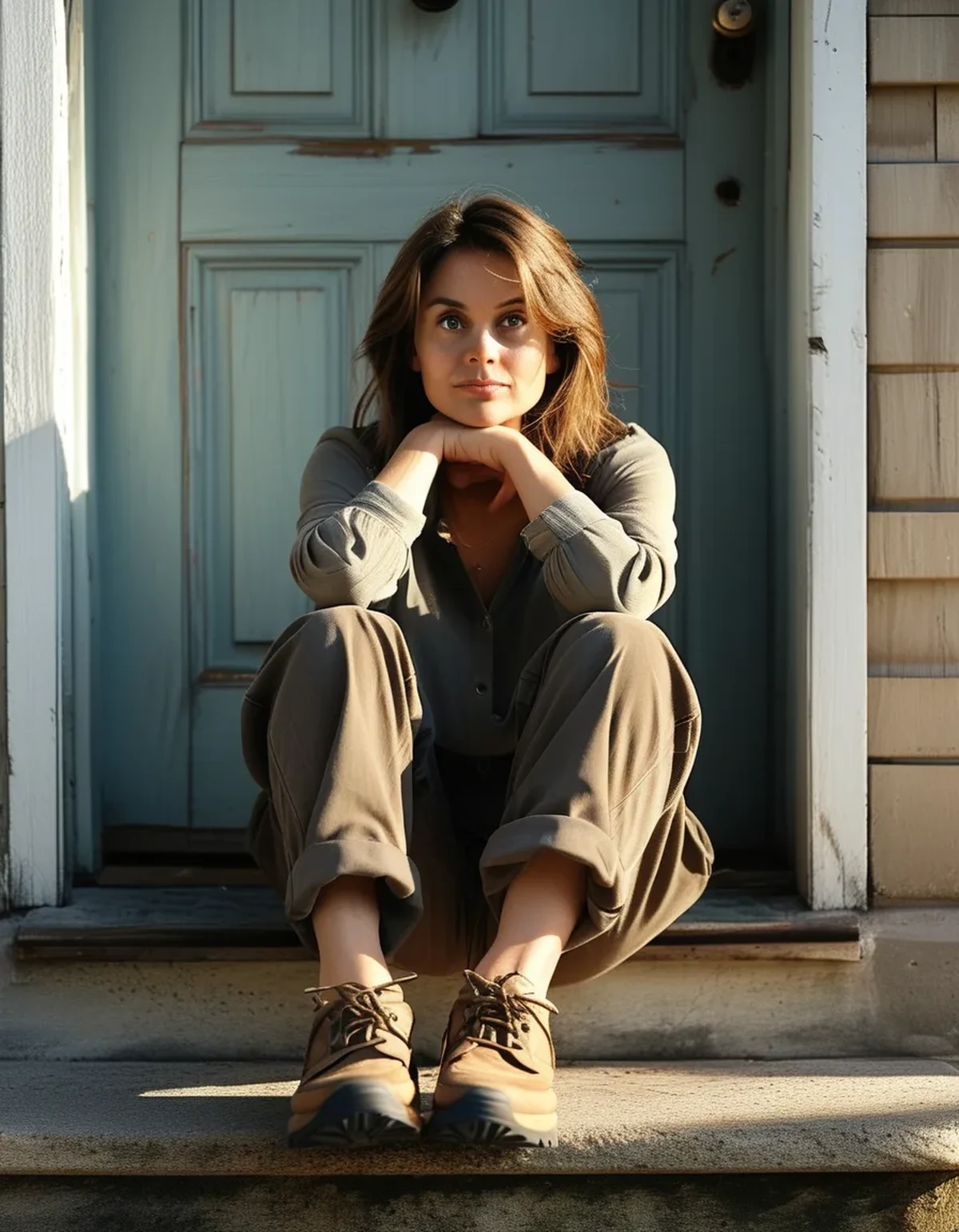
Seen here: High Waist Jogger Sweatpants with Pockets — shop it on bubblelime.com
Keep Reading
This article is for general informational and styling purposes only. Fit, sizing, and product availability may vary.