Weighted Backpack or Weighted Vest for Walking: Which Actually Works Better?
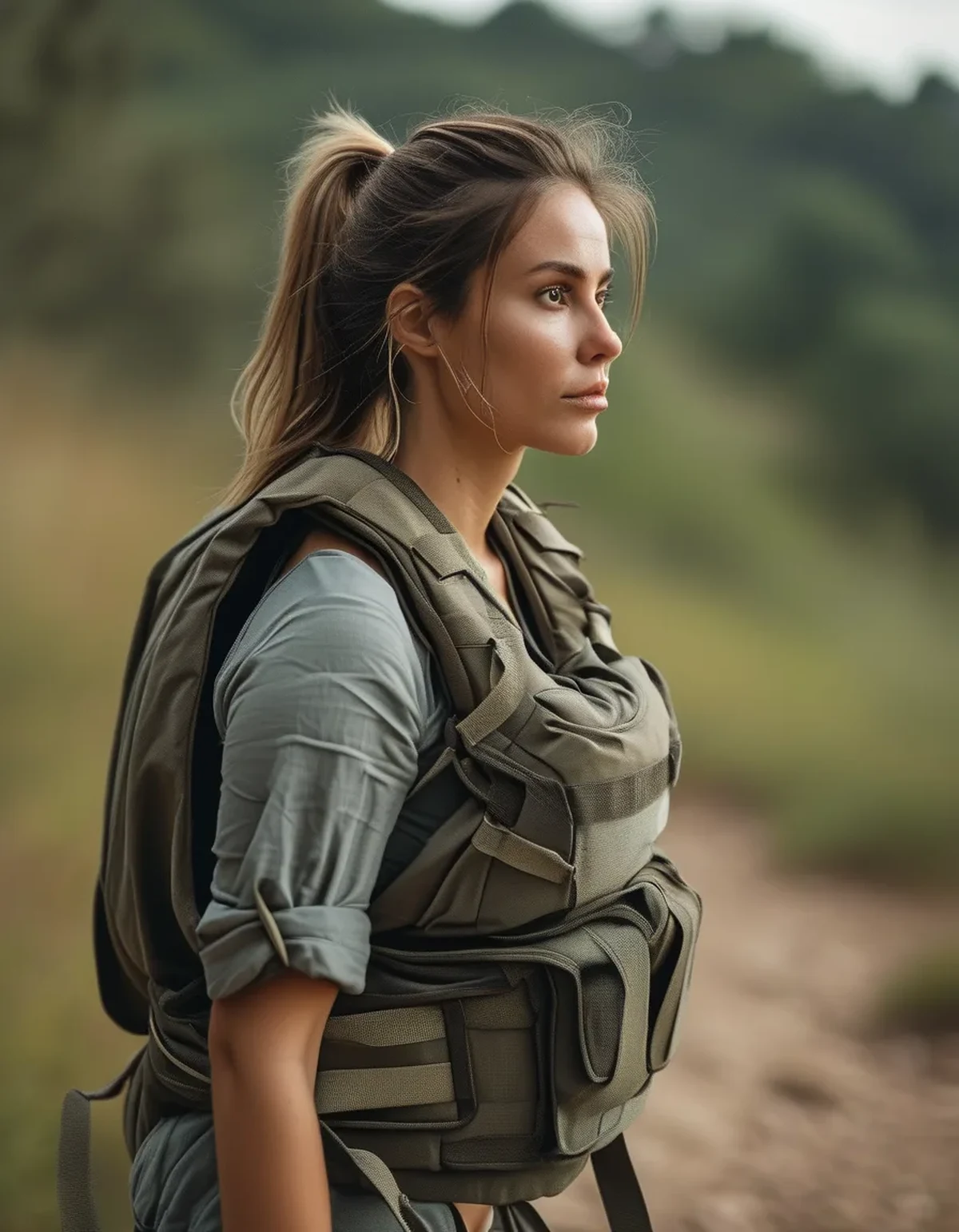
Quick Answer: A weighted vest generally distributes load more evenly across the torso and keeps weight closer to your center of gravity, making it more comfortable and safer for posture over longer walks, while a weighted backpack tends to concentrate load higher and further from center, increasing strain on the shoulders and lower back — a vest is the better default for regular weighted walking, while a backpack works fine for shorter, lighter-load walks.
Both genuinely add training stimulus to a walk, but they’re not interchangeable once the weight or distance starts increasing.
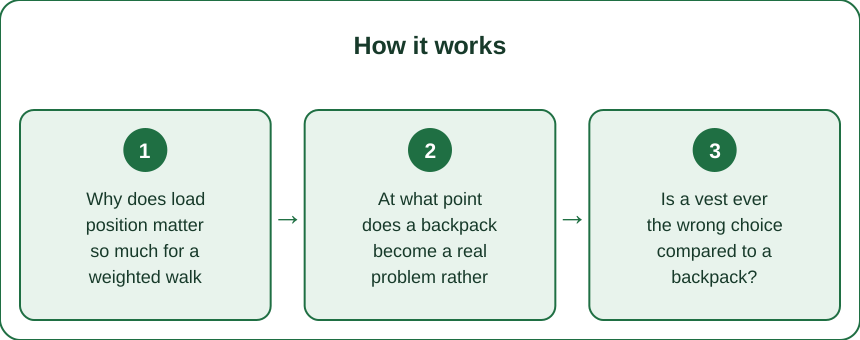
Why does load position matter so much for a weighted walk specifically?
Walking is a repetitive, sustained-duration activity, so even a small postural compromise from poorly distributed weight compounds over hundreds or thousands of steps, unlike a short strength exercise where imperfect load position matters less because the exposure time is much shorter.
At what point does a backpack become a real problem rather than a minor inconvenience?
Once total added weight exceeds roughly 10% of body weight, a backpack’s higher, further-from-center load position starts meaningfully increasing forward lean and shoulder strain, whereas a properly fitted vest at the same weight keeps posture noticeably more neutral because the load sits closer to the spine.

Is a vest ever the wrong choice compared to a backpack?
For very short walks or light loads (under about 5% of body weight), the difference between the two is minor enough that backpack convenience can reasonably win out, particularly if someone already owns a backpack and doesn’t want to buy dedicated weighted-vest equipment for occasional use.
What Nobody Tells You About Weighted Walking Gear
Nobody tells you that a poorly fitted weighted vest — one that shifts or bounces during walking — can actually be worse than a backpack, since inconsistent load movement creates unpredictable strain rather than the steady, predictable load a well-fitted vest is supposed to provide. Fit quality matters as much as the vest-versus-backpack choice itself.
FAQ: Weighted Walking Gear, Answered
How much weight is reasonable to start with for weighted walking?
Most recommendations start around 5-10% of body weight, increasing gradually only after several weeks of comfortable adaptation at the lower amount.
Is weighted walking safe for people with existing back issues?
Anyone with an existing back condition should check with a doctor or physical therapist before adding significant load to walking, since individual risk varies a lot by condition.
Does a weighted vest actually burn meaningfully more calories than a normal walk?
Yes, added load increases the energy cost of walking measurably, though the difference is generally modest rather than dramatic at commonly used weight percentages.
TL;DR:
- A weighted vest keeps load closer to center, making it more comfortable for longer or heavier weighted walks
- A backpack concentrates load higher and further back, straining shoulders and lower back more as weight increases
- Backpacks are fine for short walks or light loads under about 5% of body weight
- Fit quality matters as much as the vest-versus-backpack choice itself
For anything beyond occasional light use, a properly fitted vest is the safer, more comfortable default for regular weighted walking.
See It in Motion
Seen here: High Waist Yoga Leggings with Side Pockets — shop it on bubblelime.com
Keep Reading
This article is for general informational and styling purposes only. Fit, sizing, and product availability may vary.