Is Walking Slower on Purpose Actually Better for You Than Walking Fast?
Quick Answer: Slower, intentional walking won’t match fast walking for calorie burn or cardiovascular intensity, but it offers distinct benefits — better digestion, lower cortisol, improved mood regulation, and easier joint recovery — that make it a legitimate complement to, not a replacement for, brisk walking.
Every walking guide pushes you to walk faster for better results. But slowing down on purpose isn’t laziness — it activates a different, equally real set of benefits that faster walking doesn’t reach.

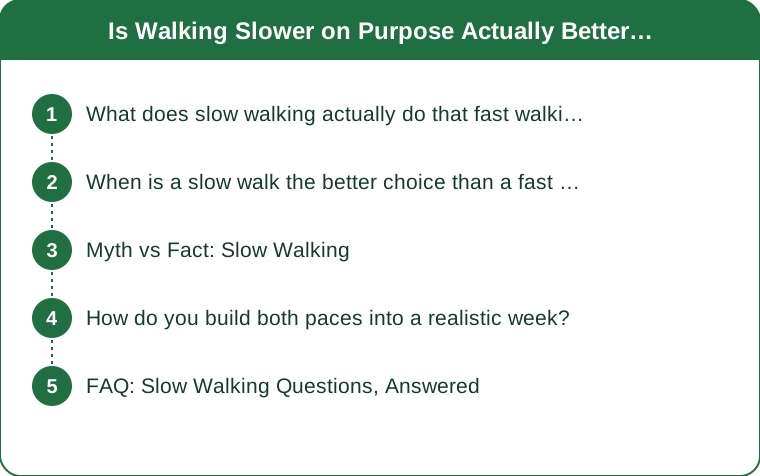
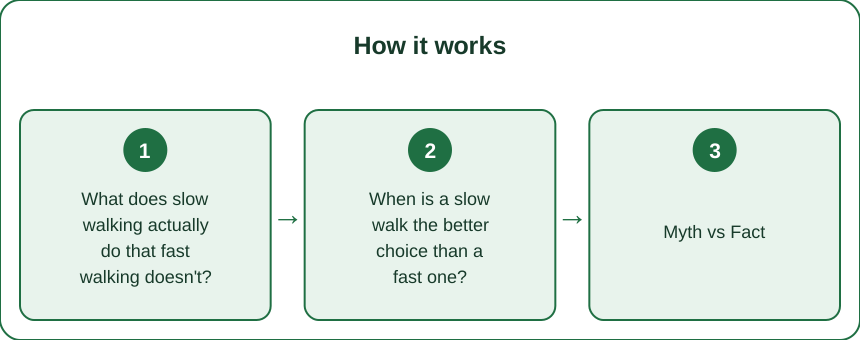
What does slow walking actually do that fast walking doesn’t?
Slower walking keeps your body in a parasympathetic (‘rest and digest’) state rather than pushing into a mild stress response, which supports better digestion when walked after meals and measurably lower cortisol compared to a brisk pace that raises heart rate more significantly.
It also allows for genuine mindfulness and mental processing — many people report their best problem-solving and stress-relief happens on slow walks specifically because the pace doesn’t demand focus on breathing or exertion.
When is a slow walk the better choice than a fast one?
- After a meal — slow walking aids digestion without redirecting blood flow away from it the way vigorous exercise can
- During high-stress periods — the calming effect is stronger at a slower pace
- On active recovery days — gentle movement without added cardiovascular load
- Before bed — a slow evening walk can support wind-down without the alerting effect of a brisk one

Myth vs Fact: Slow Walking
Myth: Slow walking provides basically no health benefit. Fact: It measurably supports digestion, stress reduction, and joint mobility — the benefits are just different from, not absent compared to, brisk walking’s cardiovascular ones.
Myth: You should always walk as fast as possible for it to ‘count.’ Fact: Different paces serve different purposes; an all-fast approach misses the recovery and mindfulness benefits slower walking specifically provides.
Myth: Step count matters more than pace either way. Fact: For general movement and digestion goals, that’s largely true — but for cardiovascular training specifically, pace and heart rate elevation matter more than raw step count.
How do you build both paces into a realistic week?
A workable split: 3-4 brisk walks per week for cardiovascular benefit, plus daily short slow walks (after meals, before bed, or as stress breaks) that don’t count toward your ‘exercise’ total but still add up in digestion and mood benefits.
They’re not competing strategies — treating slow walks as a separate, complementary tool rather than a lesser version of fast walking gets you both sets of benefits.
FAQ: Slow Walking Questions, Answered
Does slow walking burn any meaningful calories?
Some, but noticeably less than brisk walking per minute — its value lies more in digestion, stress, and mobility benefits than calorie burn.
How slow counts as a ‘slow walk’ for these benefits?
A pace where you can hold a full conversation without any breathlessness — roughly a leisurely stroll, not a power walk.
Can slow walking replace my cardio workouts entirely?
Not for cardiovascular fitness goals specifically — pair it alongside brisk walking or other cardio rather than as a full substitute.
TL;DR:
- Slow walking supports digestion, lowers cortisol, and aids mental processing in ways fast walking doesn’t
- It’s most useful after meals, during stress, on recovery days, and before bed
- It won’t replace brisk walking for cardiovascular fitness — the two serve different goals
- A mixed weekly approach (brisk walks + daily slow walks) captures both sets of benefits
Slowing down on purpose isn’t a lesser workout — it’s a different tool doing a different job.
See It in Motion
Seen here: High Waist Yoga Leggings with Side Pockets — shop it on bubblelime.com
Keep Reading
This article is for general informational and styling purposes only. Fit, sizing, and product availability may vary.