Why the Same Walking Route Stops Working After a Few Weeks (And How to Fix It Without Moving)
A walking route that felt genuinely refreshing the first few weeks can quietly stop delivering the same mental lift once it becomes fully familiar, even though the physical exercise itself hasn’t changed at all. This is a real, well-documented pattern, not a sign that walking itself has stopped working. Here is why it happens and how to fix it without needing a whole new location.

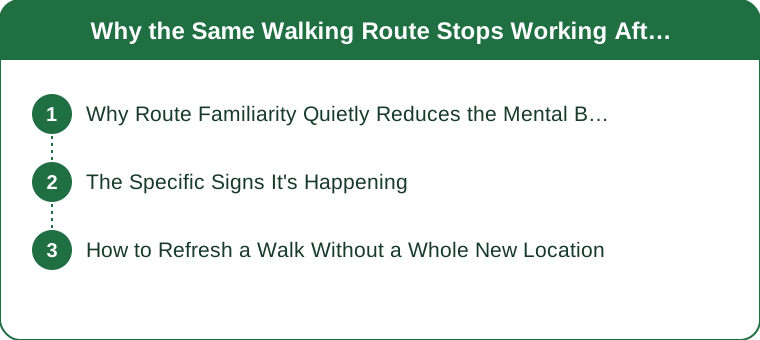
Why Route Familiarity Quietly Reduces the Mental Benefit
The underlying reason: the the-brain-stops-actively-processing-a-fully-familiar-environment (the novelty of an environment driving a meaningful part of walking’s attention-restoring and mood-lifting effect, per the walking-for-mental-health-guide logic, and that novelty fading almost entirely once a route becomes fully memorized — the a-fully-known-route-stops-requiring-active-attention-and-that-drop-in-engagement-is-the-actual-change), the the-autopilot-walking-doesnt-provide-the-same-mental-reset (the brain shifting into autopilot on a familiar route, which still provides physical benefit but loses much of the mental-break quality that made early walks on that route feel so restorative — the physical-benefit-persists-but-the-mental-reset-effect-specifically-fades), the the-decision-free-navigation-removes-a-genuine-engagement-source (the not needing to think about direction or notice surroundings removing a small but real source of present-moment engagement that a newer route naturally provides — the removing-navigation-decisions-removes-a-real-source-of-engagement-too), the the-its-a-documented-general-pattern-not-specific-to-walking (the general habituation to repeated stimuli being a well-established psychological pattern across many contexts, applying to walking routes as one specific case — the this-is-general-habituation-not-something-unique-to-walking-specifically), and the reframe (the fading benefit as predictable habituation to a familiar stimulus, not a sign that walking as an activity has stopped being valuable — the physical benefit is intact even as the mental novelty benefit fades).

The Specific Signs It’s Happening
What to notice: the the-walk-starts-feeling-like-a-chore-rather-than-a-break (the walk shifting from something looked forward to into a box to check, a subjective but real signal worth taking seriously — the the-shift-in-how-it-feels-is-the-clearest-personal-signal), the the-you-cant-recall-any-specific-details-from-a-recent-walk (the arriving home without any memory of anything specific noticed along the way, a sign the walk happened almost entirely on autopilot — the no-specific-memories-means-minimal-active-engagement-happened), the the-the-post-walk-mood-lift-feels-smaller-than-it-used-to (the mood and clarity improvement that used to reliably follow a walk feeling noticeably diminished compared to when the route was newer — the a-smaller-post-walk-lift-is-a-direct-signal-the-novelty-effect-has-faded), the the-youre-reaching-for-a-podcast-or-phone-more-than-you-used-to-on-this-route (the increasing reliance on external stimulation during the walk itself often being an unconscious compensation for a route that no longer provides enough novelty on its own — the increased-reliance-on-outside-stimulation-signals-the-routes-own-novelty-has-run-out), and the frame (the signs as the walk feeling like a chore, no specific memories afterward, a smaller mood lift, and reaching more for outside stimulation — together indicating route habituation rather than walking itself losing value).
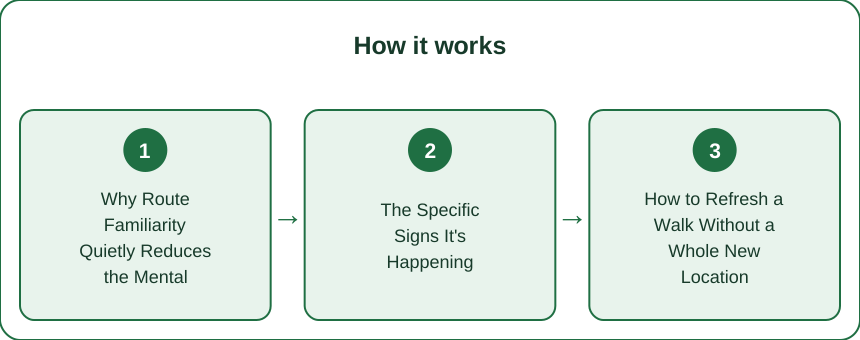
How to Refresh a Walk Without a Whole New Location
What actually works: the walk-the-same-route-in-the-reverse-direction (the simple act of reversing direction presenting familiar surroundings from a genuinely different visual angle, refreshing perceived novelty without any new planning — the reversing-direction-is-the-lowest-effort-highest-return-fix), the the-change-the-time-of-day-for-the-same-route (the same path looking and feeling different at a different time of day — different light, different activity around it — providing real novelty from the identical physical route, per the morning-walk-benefits-guide and evening-walk-ritual-guide contrast — the same-route-different-time-genuinely-changes-the-experience), the the-add-a-small-deliberate-noticing-practice (the intentionally picking one category to notice each walk — architecture, plants, sounds — reintroducing active attention to an otherwise autopilot route — the a-simple-noticing-prompt-reintroduces-engagement-without-changing-the-route-at-all), the the-vary-the-pace-or-add-a-short-detour-segment (the changing pace for a portion of the walk or adding one small new side-street segment providing enough novelty to disrupt full habituation without requiring a whole new route, per the walking-pace-versus-step-count-guide logic — the a-small-variation-segment-is-enough-to-meaningfully-refresh-the-experience), the the-rotate-through-a-small-set-of-known-routes-rather-than-one-fixed-route (the maintaining three or four routes in rotation rather than one single default, so no single route has time to become fully habituated before it’s changed again — the a-small-rotation-of-routes-prevents-any-one-from-fully-habituating), and the frame (the refresh strategy as reversing direction, changing the time of day, adding a noticing practice, varying pace or adding a small detour, and rotating between a few known routes — meaningful novelty restored without needing to discover an entirely new place to walk).
A walking route’s mental benefit fades with familiarity because the brain shifts into autopilot once a path is fully known, losing much of the active engagement and novelty that drove the original mood-lifting effect, even though the physical benefit of the walk itself remains intact — a well-documented pattern of general habituation rather than a sign walking has stopped working. The clear signs are the walk starting to feel like a chore, arriving home with no specific memory of the walk, a noticeably smaller post-walk mood lift, and reaching more for a podcast or phone to compensate for a route that no longer provides enough novelty on its own. Refreshing it doesn’t require a new location — reversing direction on the same path, walking it at a different time of day, adding a simple noticing practice, varying pace or adding one small detour segment, and rotating between three or four known routes instead of one fixed default all restore enough novelty to meaningfully bring the mental benefit back.
See It in Motion
Seen here: High Waist Yoga Leggings with Side Pockets — shop it on bubblelime.com
Keep Reading
This article is for general informational and styling purposes only. Fit, sizing, and product availability may vary.