Walking Form: Yes, There's a Right Way — and It Changes Everything
Quick Answer: Good walking form is tall posture with eyes on the horizon, shoulders back and down, and power coming from the back foot pushing off rather than the front foot reaching. Bend your arms to about 90 degrees and swing from the shoulder — it’s free speed. Practice one cue per walk, not seven: at roughly 7,000–8,000 steps a day, walking is the most-repeated movement you own.
Nobody has ever coached your walking. You’ve done it roughly 100 million times and received zero technique feedback.
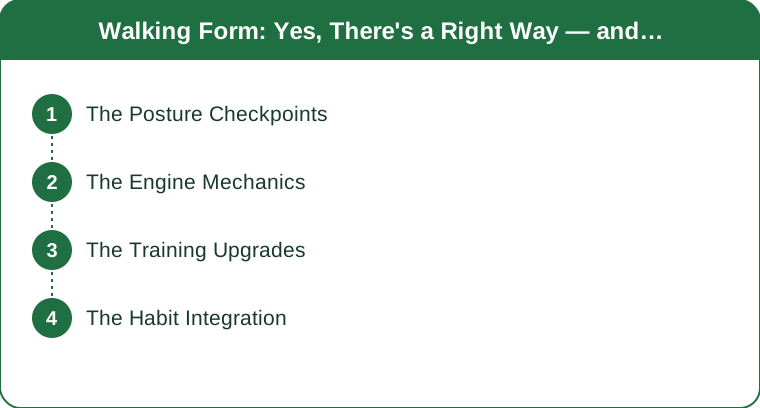
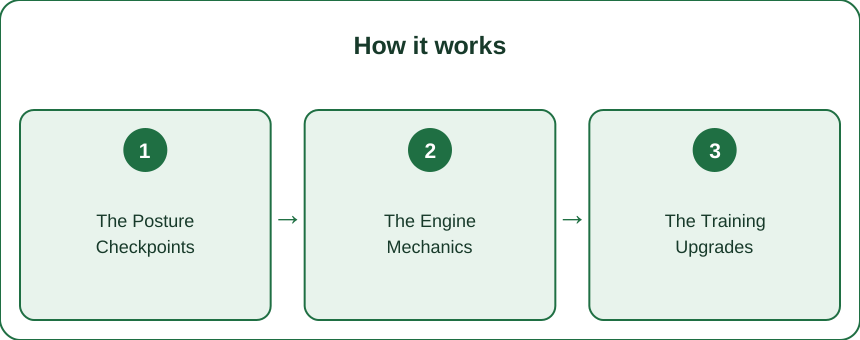
Which is strange, because the difference between the stroll that ambles and the walk that trains is entirely mechanical — and it’s four things.
Fix them and you’ve upgraded your highest-volume movement by a long way.

What Is Good Walking Posture?
A top-down audit, four checkpoints:
1. Head tall, eyes on the horizon. Not on your phone, not on the pavement three feet ahead. Every inch your head sits forward of your shoulders adds meaningful load to the neck and upper back, and you’re doing it thousands of times per walk. The cue: imagine a string lifting you from the crown.
2. Shoulders back and down. The desk hunch follows people outdoors — most walkers hold the same rounded posture they held at their monitor. One shoulder reset per song is a surprisingly effective fix, since posture cues fade after about ninety seconds regardless of intention.
3. Ribs stacked over hips. There are two ways to lean forward. Leaning from the waist creates a shuffling, collapsed posture. Leaning very slightly from the ankles, with the body in one line, is the athletic version. Aim for the second.
4. Gaze drives gait. This is the underrated one. Where you look literally changes how you move — horizon-walkers stride, phone-walkers shuffle, and the difference is visible from a block away. Looking up is the single fastest posture fix available and it’s free.
Where Does Walking Power Actually Come From?
The back foot. Not the front one.
This is the most useful mechanical insight in walking, and it inverts what most people instinctively do.
Push, don’t reach. The stride’s engine is the back foot driving off the ground through the glute and calf. Reaching further forward with the front foot doesn’t lengthen your stride usefully — it lands your foot ahead of your center of mass, which is a braking force. Exactly the same error as overstriding in running.
The cue that fixes it: think about pushing the ground backward behind you rather than reaching forward. You’ll feel it immediately in the glutes.
Arm swing is not cosmetic. Bend your elbows to roughly 90 degrees and swing from the shoulder, hands travelling from hip to chest height. Bent arms are a shorter pendulum, which naturally increases cadence. Straight, swinging arms slow you down. This is genuinely free speed.
Cadence beats stride length. To walk faster, take quicker steps, not longer ones. A brisk walk is a turnover story. Try counting your steps for 30 seconds — most casual walking sits around 100–110 steps per minute, and brisk walking is closer to 120–130.
Heel to toe roll. Land on the heel, roll through the midfoot, push off the toes. Full-foot participation. Flat-slapping the whole foot down skips the push-off phase entirely.

How Does Form Turn a Walk Into Training?
Form is an intensity dial you can turn without walking further.
Brisk intervals are form intervals. The popular Japanese-style interval walking method — alternating 3 minutes brisk with 3 minutes easy — works partly because the brisk segments force better mechanics. Tall posture, arms driving, emphatic push-off. You’re raising intensity through mechanics, not just through willing yourself to hurry.
Hills reward form doubly. Going up: shorten the stride, lean from the ankles (not the waist), and drive the arms harder. Going down: shorten the stride again and let the knees stay soft — the descent is where walking injuries actually happen.
Loaded walking amplifies everything. A weighted vest or a rucksack magnifies both good and bad mechanics. Start at 5–10% of bodyweight, and only once your unloaded posture is solid. Loading a forward-head, rounded-shoulder walk just loads a forward-head, rounded-shoulder walk.
Surface variety adds ankle work. Trail, grass, and gravel demand continuous small stabilizations from the feet and ankles that pavement doesn’t. It’s barefoot-adjacent foot strengthening at essentially zero risk.
The 5 Mistakes Everyone Makes While Walking
- Walking with a phone in hand at eye-down angle. The single biggest posture destroyer. Pocket the phone or hold it up — but the pocket is better.
- Overstriding. Reaching the front foot out to go faster is a braking action. Faster comes from cadence.
- Straight arms. They swing slowly and cap your turnover. Bend to 90 degrees.
- Walking in worn-out shoes. At 7,000 steps a day, a shoe with collapsed cushioning or a worn outer heel edits your gait every single step. Check the wear pattern — this matters far more at daily volume than any technique cue.
- Trying to fix seven things at once. This is the one that guarantees nothing changes. Seven simultaneous cues fix zero of them.
How Do You Actually Install Better Walking Form?
One cue per walk. That’s the whole method.
This walk is the tall walk. Just posture. Nothing else. Tomorrow’s is the push-off walk. Just the back foot. The next is the arm walk. Just the elbow bend and swing.
Motor learning works this way — a single focus point installs faster than a checklist, and after a few weeks the earlier cues start persisting on their own.
The first-two-minutes ritual. Every walk opens with a posture scan: crown lifted, shoulders reset, ribs stacked, eyes up. Two minutes of deliberate form at the start tends to carry a surprising distance into the walk before it decays.
The shoe check. Look at the soles of your walking shoes. Even wear across the forefoot is normal. Heavily worn outer heel, a collapsed midsole, or a visible lean when they sit on a flat surface means they’re editing your gait. Replace every 400–500 miles.
The payoff math: roughly 7,000 steps a day at better mechanics is, by volume, the largest form upgrade available in your entire movement life. No gym required. Already scheduled.
You were going to take the steps anyway.
Frequently Asked Questions
Should you land on your heel or midfoot when walking?
Heel first, then roll through to a toe push-off. Walking and running differ here — heel striking is the natural and efficient pattern for walking because you’re not managing the impact forces that running generates. What matters more is completing the roll and pushing off, rather than slapping the foot down flat.
Does walking posture really matter?
Yes, largely because of volume. A forward-head posture adds load to the neck and upper back with every step, and at 7,000 steps a day that accumulates. Good posture also enables a proper push-off and arm swing, which makes walking a more effective cardiovascular activity.
How fast should you walk for exercise?
Brisk walking is generally defined as a pace where you can talk but not sing comfortably — around 3 to 4 mph for most adults, or roughly 120–130 steps per minute. Increase pace through faster cadence rather than longer strides, since overstriding creates a braking effect.
Do you burn more calories walking with good form?
Somewhat. Proper arm swing and an emphatic push-off recruit more muscle and increase pace at the same perceived effort, which raises energy expenditure modestly. The bigger benefit is that good mechanics let you walk faster and longer comfortably, and total volume matters more than efficiency per step.
When to Check With a Professional
Persistent knee, hip, or lower back pain during or after walking is worth having assessed rather than trying to cue away — gait problems frequently have a strength or structural driver that form advice alone won’t resolve. The same applies to foot pain, particularly first-thing-in-the-morning heel pain, which is a classic plantar fasciitis pattern.
If you notice one shoe wearing dramatically faster than the other, or you catch your toe regularly, a physiotherapist or podiatrist gait assessment is genuinely useful. Anyone with a neurological condition affecting balance or gait should get individual guidance before changing walking mechanics.
TL;DR:
- Four posture checkpoints: crown lifted, shoulders back and down, ribs over hips, eyes on the horizon.
- Power comes from the back foot pushing, not the front foot reaching. Reaching forward is braking.
- Bend arms to 90 degrees and swing from the shoulder — free speed. Go faster via cadence, not stride length.
- Use form as an intensity dial: brisk intervals, hills, a light weighted vest, varied surfaces.
- One cue per walk, plus a two-minute posture scan at the start. And check your shoe wear — at 7,000 steps a day it edits everything.
See It in Motion
Seen here: High Waist Jogger Sweatpants with Pockets — shop it on bubblelime.com
Keep Reading
This article is for general informational and styling purposes only. Fit, sizing, and product availability may vary.