Walking in the Dark: What Changes About Your Pace, Route, and Visibility
Quick Answer: In low light your body automatically shortens its stride and slows down - a normal balance adaptation, not a fitness loss - so expect your pace to drop by roughly 5-10% and stop reading it as a decline. For visibility, the thing that actually works is movement-based reflectivity on your ankles and wrists, not a reflective vest alone. Drivers detect a moving light pattern at several times the distance they detect a static one.
The evening walk is the habit most likely to quietly disappear in October. Not because anyone decides to stop, but because the first walk in the dark feels different enough - slower, more effortful, slightly uneasy - that it stops being the pleasant part of the day.
Why does your pace drop as soon as it gets dark?
Your gait is more visually dependent than it feels. In daylight, your eyes are constantly reading the surface ahead and pre-planning foot placement several steps in advance. That feed-forward information is what allows a long, confident stride.
In low light that information degrades, and your nervous system responds with a well-documented set of adaptations: shorter stride length, higher step frequency, more time with both feet on the ground, and a slightly wider base of support. It is the same pattern you see on ice or an uneven trail. The result is a slower pace at the same or higher effort.
This is why the first dark walk feels harder despite being slower. You are working roughly as hard, moving less far, and getting a worse number at the end of it.
Practical implications:
- Stop comparing pace across seasons. A 5-10% slowdown from August to November is expected. Compare dark walks to dark walks.
- Switch your metric to time or steps rather than pace or distance for the dark months. A 35-minute walk is a 35-minute walk regardless of what the pace column says.
- A headlamp genuinely restores some of the pace, because it gives your visual system the surface information it lost. Even a small one aimed a few steps ahead makes a measurable difference to how confident the stride feels.
What actually makes you visible to drivers?
This is the part where the common advice is only half right.
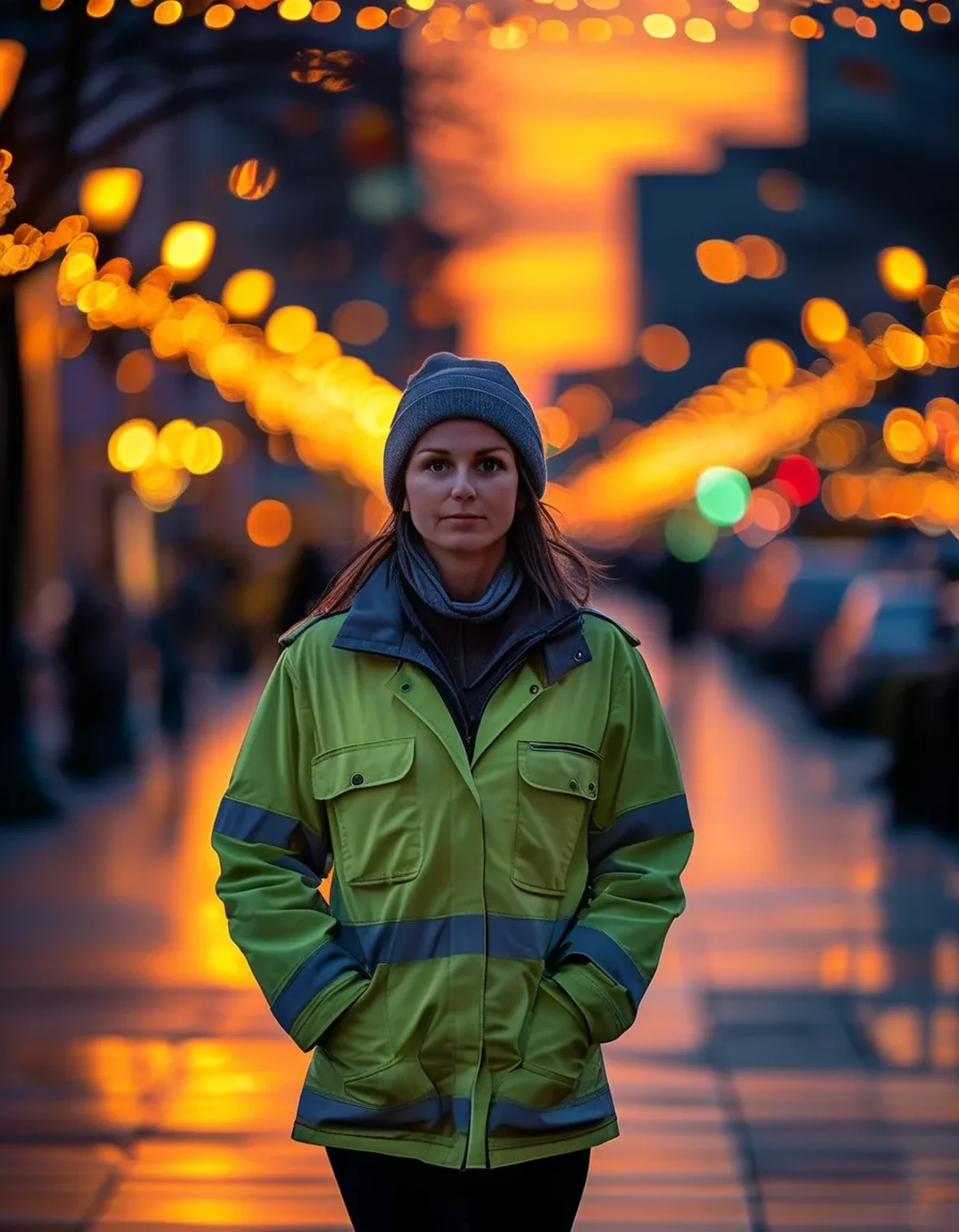
A reflective vest returns light to its source, so it works when headlights hit it. What it produces is a static bright shape, and static bright shapes in a cluttered visual environment - signs, parked cars, storefronts - get lost.
What works far better is biological motion: reflective material on the parts of you that move in a recognizably human pattern. Reflective strips on the ankles and wrists create a moving pattern that the human visual system identifies as a person almost instantly, at substantially greater distances than a torso panel alone.
A practical priority order:
- Reflective ankle bands - cheap, light, and the single highest-return item.
- A small blinking light, red at the back, white at the front, clipped to a bag or waistband. Active light beats passive reflection in situations where headlights are not pointed at you - at intersections, on unlit paths, and against a lit background.
- Reflective wrist bands or gloves, which also make your hand signals visible when crossing.
- A reflective vest or jacket, useful as a base layer of visibility but not sufficient alone.
What does not work: dark athletic wear with a small reflective logo, phone flashlights pointed at the ground, and light-colored clothing, which is nearly invisible at night without a reflective element.
Assume drivers have not seen you until you have confirmation. Make eye contact at crossings, and do not step out on the assumption that a slowing car is slowing for you.
How should you change the route itself?
Route selection matters more in the dark than any gear decision.
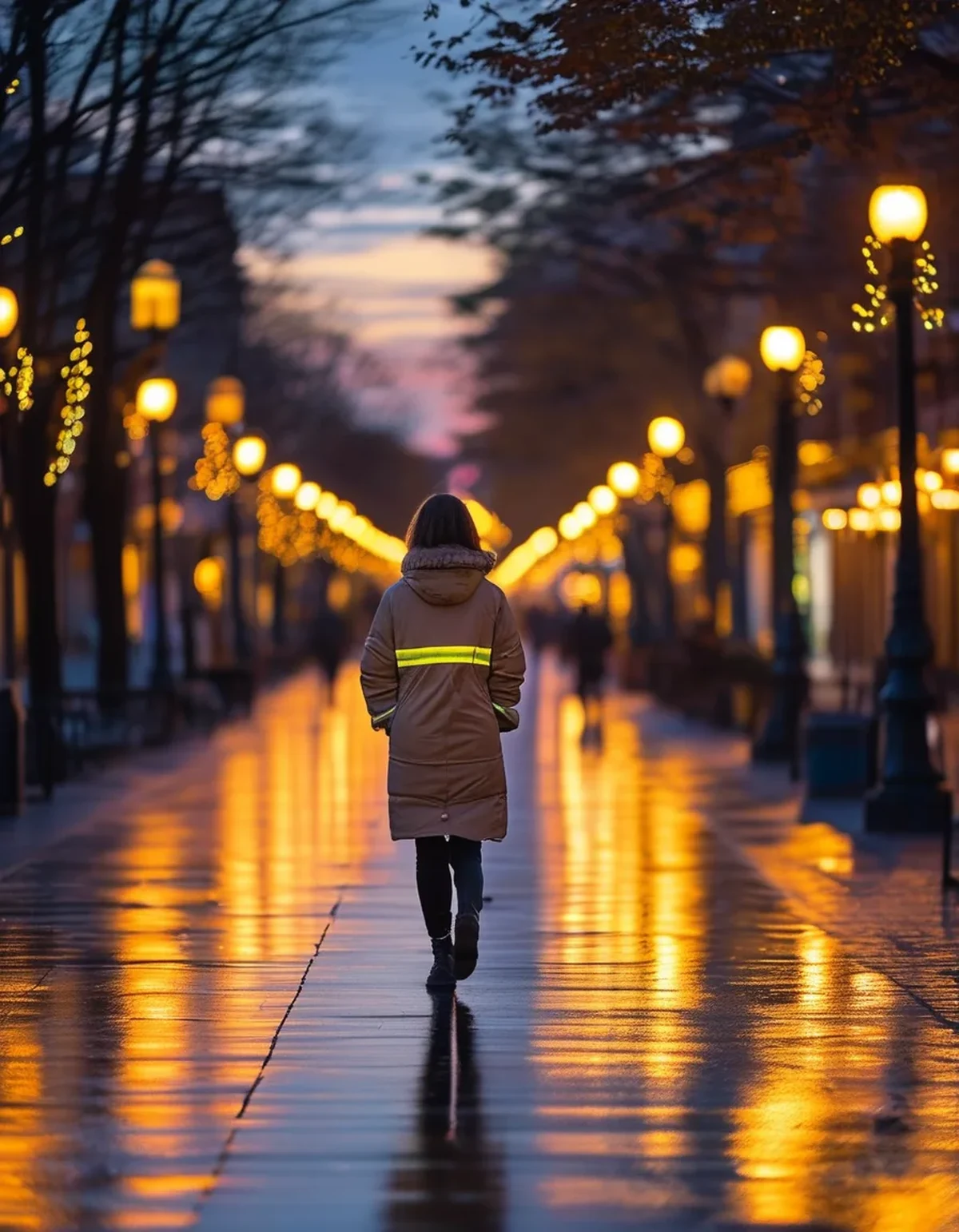
Prioritize lighting over scenery. The pleasant path along the creek is the wrong choice in November. Consistent streetlighting reduces trip risk substantially and makes you visible to everyone.
Prefer routes with sidewalks the whole way. If part of your summer loop involves 200 yards on a shoulder, that section is disproportionately risky after dark. Reroute rather than accept it.
Walk facing traffic if there is no sidewalk. This is the standard guidance for good reason - you can see approaching vehicles and react.
Choose loops over out-and-backs near home. A loop that passes your street repeatedly gives you multiple bail-out points if the weather turns or something feels off.
Watch the surface hazards that are seasonal. Wet leaves are genuinely slippery, particularly on painted crosswalk lines and metal utility covers. Acorns and small branches roll underfoot. And the first frosts create black ice on bridges and shaded sections well before anything else freezes.
On timing: the hour after sunset is statistically among the worse periods for pedestrian visibility, because drivers’ eyes are still adapting and headlights are not yet fully effective. If you can shift the walk either earlier into full daylight or later into full dark with lights on, both are safer than the exact transition window.
What Nobody Tells You About the Mental Side of the Dark Walk
The physical adjustments are straightforward. The part that actually determines whether the habit survives is that walking in the dark feels different in a way that has nothing to do with fitness.
There is a mild alertness cost. Your attention is doing more work - scanning surfaces, tracking cars, monitoring surroundings - and that background vigilance is genuinely tiring in a way a daylight walk is not. People often describe the dark walk as less restorative, and that is a real effect, not a mindset failure.
Some things that reliably help:
- A familiar route. Novelty is pleasant in daylight and taxing in the dark. Rotate two or three known loops rather than exploring.
- Company, in person or on the phone. A phone call with one earbud in changes the experience of a dark walk more than any other single variable.
- Audio that is calm rather than absorbing. Something engaging enough to enjoy, not so engaging that you stop scanning. Keep one ear free.
- Telling someone your route and expected time, or using a location share. This removes a low-level background worry that costs more attention than people realize.
And the reframe that matters most: the dark walk is a different activity than the summer walk, not a degraded version of it. Judged as its own thing - 30 minutes outside, moving, at the end of a workday, in weather that will not last - it holds up perfectly well.
FAQ: Dark Evening Walk Questions, Answered
Is it worth buying a headlamp for neighborhood walking?
On lit sidewalks, a small clip-on light for visibility is enough. On any unlit stretch, a headlamp is worth it - not to see far, but to see the surface immediately ahead, which is what restores your stride length and prevents trips.
How much slower is normal?
Most people see roughly 5-10% slower pace in low light at the same perceived effort. If you are 25% slower, look at surface conditions and footwear before assuming a fitness change.
Should I switch to walking in the morning instead?
If mornings work for you, yes - but note that in deep autumn, morning walks are also dark, and morning darkness comes with more commuter traffic. The evening walk with good lights is often the safer of the two.
Do reflective phone cases or small logo strips help?
Not meaningfully. The threshold is having enough reflective area, in the right places, moving in a human pattern. A pair of $10 ankle bands outperforms every incidental reflective detail on typical athletic wear combined.
TL;DR:
- Your pace drops 5-10% in the dark because your gait shortens automatically. Switch your metric to time or steps.
- Visibility comes from movement - reflective ankle and wrist bands plus an active blinking light beat a vest alone.
- Choose lit, sidewalked loops, walk facing traffic where there is no sidewalk, and watch wet leaves and early black ice.
- The dark walk costs more attention. Familiar routes, one earbud, and a shared location make it sustainable.
The walk that survives November is rarely the ambitious one. It is the 30-minute loop you know by heart, with lights on your ankles, done at the same time every evening whether or not the pace column agrees.
See It in Motion
Seen here: High Waist Yoga Leggings with Side Pockets — shop it on bubblelime.com
Keep Reading
This article is for general informational and styling purposes only. Fit, sizing, and product availability may vary.