The After-Dinner Walk: Timing, Pace, and Why It Works
Quick Answer: A gentle 10 to 20 minute walk, started within about an hour of finishing dinner, meaningfully blunts the post-meal glucose rise - working muscles pull sugar out of the bloodstream without needing much insulin to do it. Keep the pace conversational: this is digestion-friendly movement, not cardio. Even two to five minutes measurably helps if that is what the evening allows. Bonus effects: gentler digestion, a cleaner wind-down for sleep, and the accidental deletion of one nightly scrolling session.
Of all the habits sold as tiny with outsized returns, the after-dinner walk is one of the few where the research actually agrees with the hype. No equipment, no outfit change required, no skill floor - and late summer is its golden season, with dusk landing right after dinner like it was scheduled for you. Here is what it does, when to go, and how to keep it alive when the evenings turn busy and dark.

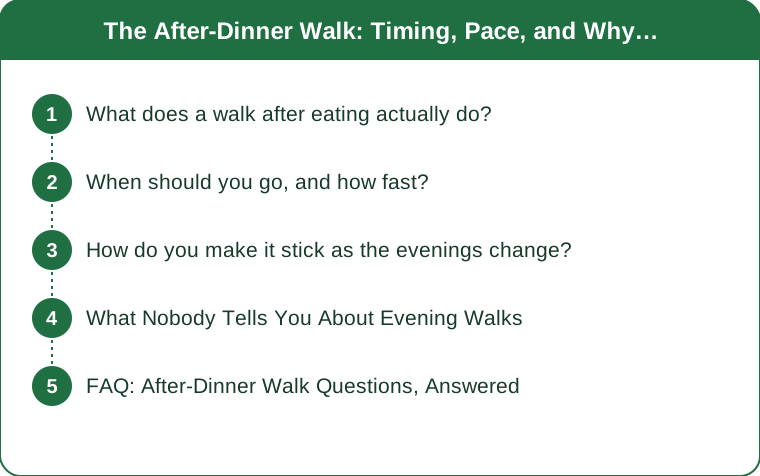
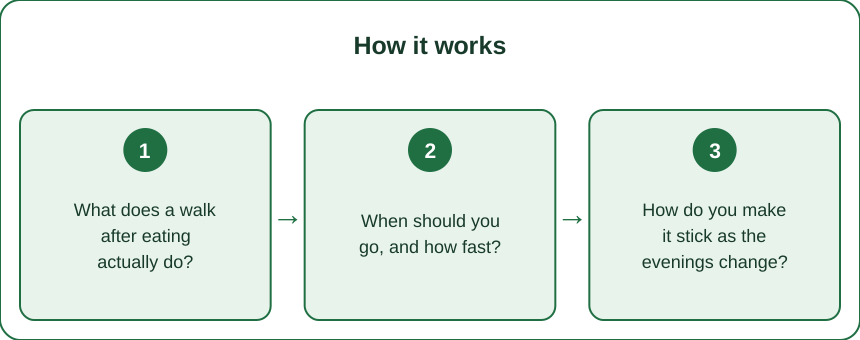
What does a walk after eating actually do?
Three well-documented things and one underrated one.
It flattens the glucose curve. After a meal - especially one with substantial carbohydrate - blood glucose climbs to a peak around 60 to 90 minutes in. Muscle contraction changes the math: working muscles pull glucose from the bloodstream through a pathway that operates largely without insulin, meaning even light walking siphons off part of the incoming surge while it is happening. Studies comparing sitting to light post-meal walking consistently show lower glucose peaks, and a widely cited 2022 review found that even two to five minutes of light walking after meals produced measurable improvement over sitting. This is not an athletes-only effect - it works at ordinary strolling intensity, which is precisely what makes it a habit rather than a workout.
It helps the mechanics of digestion. Gentle upright movement supports gastric emptying - food moves along at a comfortable pace, which for many people means less of the heavy, overfull feeling and less reflux than lying on the couch produces. The keyword is gentle: hard effort diverts blood away from digestion and can accomplish the opposite.
It closes the day for your brain. The walk works as a transition ritual - the behavioral bright line between evening obligations and actual rest. People who walk after dinner reliably report the effect that has nothing to do with glucose: the day feels finished afterward.
And it stacks light exposure and gentle movement at a useful hour. Dusk light and easy activity both nudge the wind-down process in the right direction, without the sleep-disrupting arousal that a hard evening workout can cause. It is the rare habit that helps the metabolic chart and the bedtime at the same time. General information, not medical advice - anyone managing diabetes or on glucose-affecting medication should shape the details with their care team.
When should you go, and how fast?
The two questions everyone asks, with genuinely simple answers.
Timing: within the first hour after finishing. The glucose peak arrives roughly 60 to 90 minutes after a meal, and the walk works best when the muscles are active as the surge is rising - so leaving within 15 to 45 minutes of the last bite puts your movement squarely in the useful window. Immediately is fine too, if the meal was moderate; after a genuinely huge dinner, most stomachs prefer a 15 to 20 minute buffer before moving. What squanders the effect is the long delay - a walk two hours later is still a nice walk, but the spike it was meant to blunt has already come and gone.
Pace: conversational, deliberately. The target is light intensity - you could chat the whole way, you are not out of breath, and you arrive home unsweaty. This surprises people trained to believe harder is better, but the glucose effect shows up robustly at easy intensity, and easy intensity is what digestion tolerates comfortably. Striding out hard after a full meal earns you side stitches and reflux, not bonus points. If you want harder cardio in your life, give it its own slot away from dinner.
Duration: tiered honestly.
- 2 to 5 minutes - the floor, and a real one: measurable improvement over sitting. A lap around the block or even marching while the kettle boils counts on the worst days.
- 10 to 15 minutes - the sweet spot most evenings; meaningful glucose effect, no schedule surgery required.
- 20 to 30 minutes - the full version, where the digestion comfort and the mental wind-down effects show up most strongly.
The comfort details are unglamorous and decisive: shoes you can genuinely walk in, and clothes that require zero decision - most people end up defaulting to whatever soft leggings and slip-ons live near the door, which is exactly correct. A walk that requires an outfit change becomes a walk that stops happening in about two weeks.

How do you make it stick as the evenings change?
The after-dinner walk is easy to start in August and easy to lose in October. The difference is design.
Anchor it to a cue, not a clock. The plates hit the dishwasher, the shoes go on - that is the entire trigger. Habit research keeps confirming that after X, I do Y beats at 7:30 I will walk, because dinner moves around but the sequence never does. Put the walking shoes physically by the door you leave from; friction at the doorway kills more walks than weather does.
Design a default loop and a bad-day loop. One 15 to 20 minute route you never have to think about, and one 5 minute out-and-back for the evenings when the long one feels impossible. The bad-day loop is the habit’s insurance policy - the streak survives on the short loop, and streaks are what carry you into the darker months.
Recruit the household - carefully. A walking partner doubles accountability, and the walk itself turns out to be the best conversation slot of the day: side-by-side, phones pocketed, no eye-contact pressure. The caution: never let the walk become contingent on the other person. The rule is we walk together when we can; I walk regardless.
Get ahead of the light. Sunset is already sliding earlier - late August loses a couple of minutes a night. Decide now what the dark-season version looks like: a lit main-street loop instead of the park, something reflective on the jacket, or shifting the walk to directly after the meal instead of lingering first. Habits with a pre-planned winter version survive winter; habits that meet darkness unprepared quietly end in October.
Weather-proof the fallback. Rain or a brutal day does not cancel the slot - it relocates it: ten minutes on a walking pad, laps of the apartment hallway, or an easy indoor march through one episode of something. Protecting the slot matters more than any single walk’s quality.
What Nobody Tells You About Evening Walks
It quietly replaces the worst hour of screen time. The post-dinner couch scroll is most people’s least satisfying daily hour, and the walk deletes it without a willpower fight - you cannot doomscroll and cross streets at the same time. Many people keep the habit for this reason alone, and the glucose chart becomes the bonus.
The dog has a different agenda, and that is fine. A sniff-heavy dog walk is enrichment for the dog and stop-start strolling for you - lovely, but a different activity. Households that make it work either do the steady loop first and the sniff patrol after, or accept that the dog walk is its own institution and take the human walk separately.
Dessert timing gets interesting. Walk first, dessert after, and the sweet lands on muscles that just finished pulling glucose - a friendlier sequence than dessert-then-couch. Nobody is claiming the walk cancels the cake. The walk does not cancel the cake. It just makes the cake’s paperwork tidier.
You become part of the neighborhood’s clockwork. Three weeks in, you know the other 8pm regulars, the porch cat, which house’s kitchen smells best. This sounds like nothing and is actually the stealth benefit - a light social fabric that makes the habit feel like membership rather than exercise.
The conversations go places dinner-table conversations do not. Something about walking side by side at dusk unlocks topics that face-to-face formats keep locked. Parents of teenagers discover this by accident and then guard the walk like treasure.
FAQ: After-Dinner Walk Questions, Answered
Should I walk immediately after eating or wait?
Anywhere in the first hour works, and starting within about 15 to 45 minutes of finishing lines the walk up with the rising glucose curve. After an especially large meal, a short buffer before leaving is kinder to the stomach. The only real mistake is waiting so long the window closes.
Is 10 minutes actually enough to matter?
Yes. The research floor is lower than most people expect - even a few minutes of light walking beats sitting, measurably, and 10 to 15 minutes captures a solid share of the benefit. Consistency across the week beats duration on any single night.
Will an evening walk keep me awake?
Almost always the opposite - light-intensity walking is associated with better, not worse, sleep, and the wind-down ritual effect helps many people fall asleep more easily. The caution applies to vigorous exercise close to bedtime, which is a different activity than the one this article describes.
Is the after-dinner walk better than a morning walk?
They do different jobs: the evening walk specifically targets the day’s largest meal response and the wind-down, while a morning walk delivers light exposure that anchors your body clock. The correct answer is the one your schedule will actually sustain - and they stack beautifully if you can have both.
TL;DR:
- Light walking after dinner blunts the post-meal glucose peak - muscles pull in sugar with little insulin required.
- Go within the first hour, keep it conversational, arrive home unsweaty.
- Tiers: 2 to 5 minutes is the real floor, 10 to 20 is the sweet spot, 30 is the full experience.
- Attach it to the dishes-done cue, keep shoes by the door, and hold a 5-minute bad-day loop in reserve.
- Plan the dark-season version now - lit loop, reflective layer, or walk straight after eating.
Almost nothing in health hands you this much return for this little effort: one unhurried loop of the neighborhood, started while the kitchen is still warm. The evenings are perfect for it right now - go claim one.
See It in Motion
Seen here: High Waist Yoga Leggings with Side Pockets — shop it on bubblelime.com
Keep Reading
This article is for general informational and styling purposes only. Fit, sizing, and product availability may vary.